Year 1 Maths: The Complete Curriculum Guide for Parents
- Year 1 (age 5–6) is where the formal maths curriculum begins in earnest
- Number: count to and across 100; read and write numbers 1–20 in numerals and words
- Addition and subtraction within 20; number bonds to 20 are especially important
- Early multiplication: count in 2s, 5s, and 10s; grouping and sharing equally
- Fractions: recognise ½ and ¼ visually — fold paper, share pizza, keep it physical
- Best home support: 5–10 minutes daily, using real objects before moving to written numbers
From Reception to Year 1
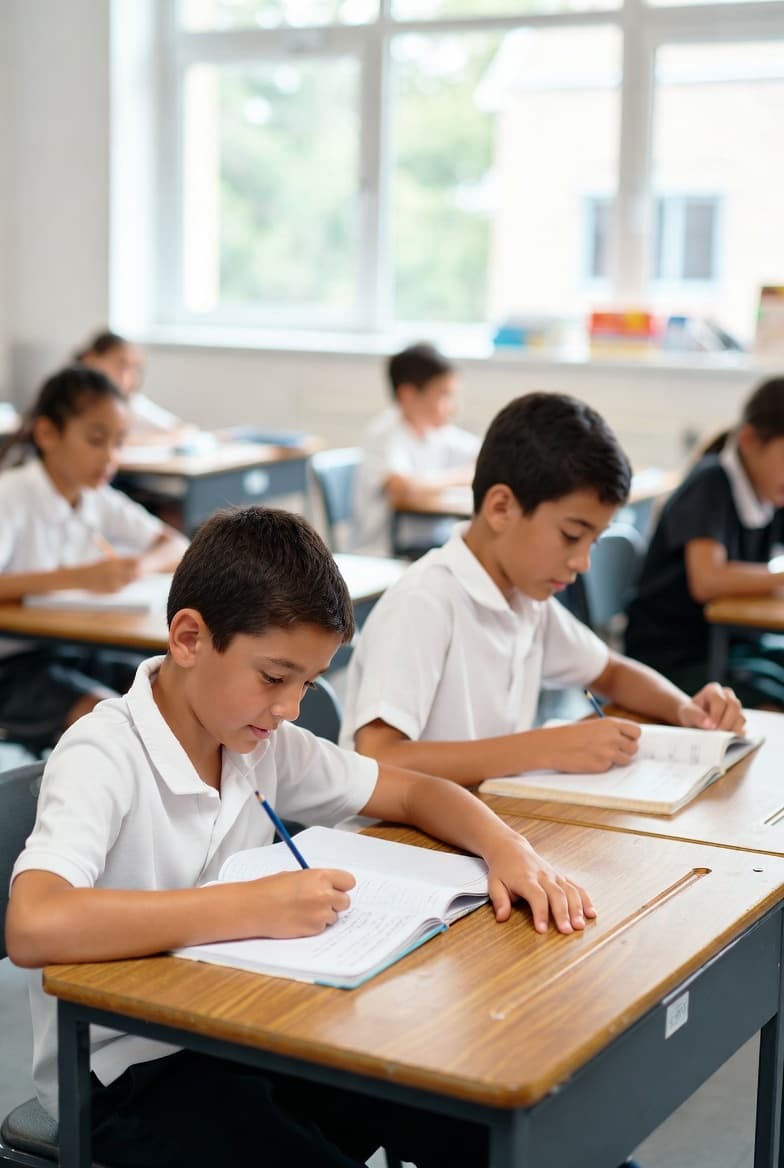
Year 1 is where formal maths education begins in earnest. Children aged 5–6 move from the play-based learning of Reception into a structured curriculum — and the foundations built this year underpin everything that follows through Key Stage 1 and beyond.
The shift can feel significant. In Reception, maths is woven into play and exploration. In Year 1, children sit at desks, use worksheets, and begin to learn specific methods. The good news is that the curriculum is carefully designed to build on what children already know from the Early Years Foundation Stage (EYFS).
Counting and Place Value
The backbone of Year 1 maths is understanding numbers up to 100:
- Count to and across 100, both forwards and backwards, beginning with 0 or 1, or from any given number
- Read and write numbers from 1 to 20 in numerals and words
- Count in multiples of 2, 5, and 10
- Given a number, identify one more and one less
- Use the language of: equal to, more than, less than, fewer, most, least
Making It Real
At home, counting games are ideal at this age. Count objects around the house, count steps on a walk, spot numbers on doors and signs, count how many red cars you see on a journey. The more real-world counting a child does, the more secure their number sense becomes.
Number Bonds to 10
Number bonds to 10 are pairs of numbers that add up to 10: 0+10, 1+9, 2+8, 3+7, 4+6, 5+5. These are essential — they form the foundation of mental arithmetic for years to come. By the end of Year 1, children should recall these instantly.
| 0+10 | 1+9 | 2+8 | 3+7 | 4+6 | 5+5 |
|---|
Addition and Subtraction
Year 1 children work with addition and subtraction within 20:
- Represent and use number bonds and related subtraction facts within 20
- Add and subtract one-digit and two-digit numbers to 20, including zero
- Read, write, and interpret mathematical statements involving + − and =
- Solve one-step problems that involve addition and subtraction, using concrete objects and pictorial representations
Worked Example
There are 8 birds on a fence. 3 fly away. How many are left?
8 − 3 = 5 birds. Use objects (counters, fingers, toys) to model this.
The Progression from Concrete to Abstract
Year 1 follows a “concrete → pictorial → abstract” (CPA) approach. Children start by handling real objects (counters, cubes), then draw pictures, and finally work with written numbers. If your child finds abstract sums hard, go back to concrete objects — this is not going backwards; it is building a stronger foundation.
Early Multiplication and Division
Formal multiplication and division come later, but Year 1 lays essential groundwork through grouping and sharing:
- Solve one-step problems involving multiplication and division by grouping objects into equal groups and counting in 2s, 5s, and 10s
- Begin to understand doubling and halving small numbers
Worked Example: Equal Sharing
Share 10 grapes equally between 2 children. How many does each get?
Give one grape to each child in turn until they are all shared: 5 each.
Fractions
Year 1 introduces fractions in their simplest form. Children learn to recognise, find, and name ½ and ¼ as parts of an object, shape, or quantity.
- Recognise halves: one of two equal parts
- Recognise quarters: one of four equal parts
- Find ½ and ¼ of shapes, objects, and small quantities
Keeping it visual and physical at this stage is much more effective than abstract notation. Fold a piece of paper in half. Cut a sandwich into four equal pieces. Share 8 strawberries into two equal groups. This is fractions in action.
Measurement and Geometry
Measurement
- Compare, describe, and solve practical problems for lengths/heights, weight/mass, and capacity/volume using language like taller, shorter, heavier, lighter, more, less
- Sequence events in chronological order (before, after, morning, afternoon)
- Tell the time to the hour and half past the hour; draw hands on a clock face
- Recognise and know the value of different coins and notes
Geometry
- Recognise and name common 2D shapes: rectangles (including squares), circles, and triangles
- Recognise and name common 3D shapes: cuboids (including cubes), pyramids, spheres, cylinders, and cones
- Describe position, direction, and movement: left/right, top/bottom, above/below, forwards/backwards, quarter turns, half turns
How to Support Your Child at Home
1. Use Real Objects First
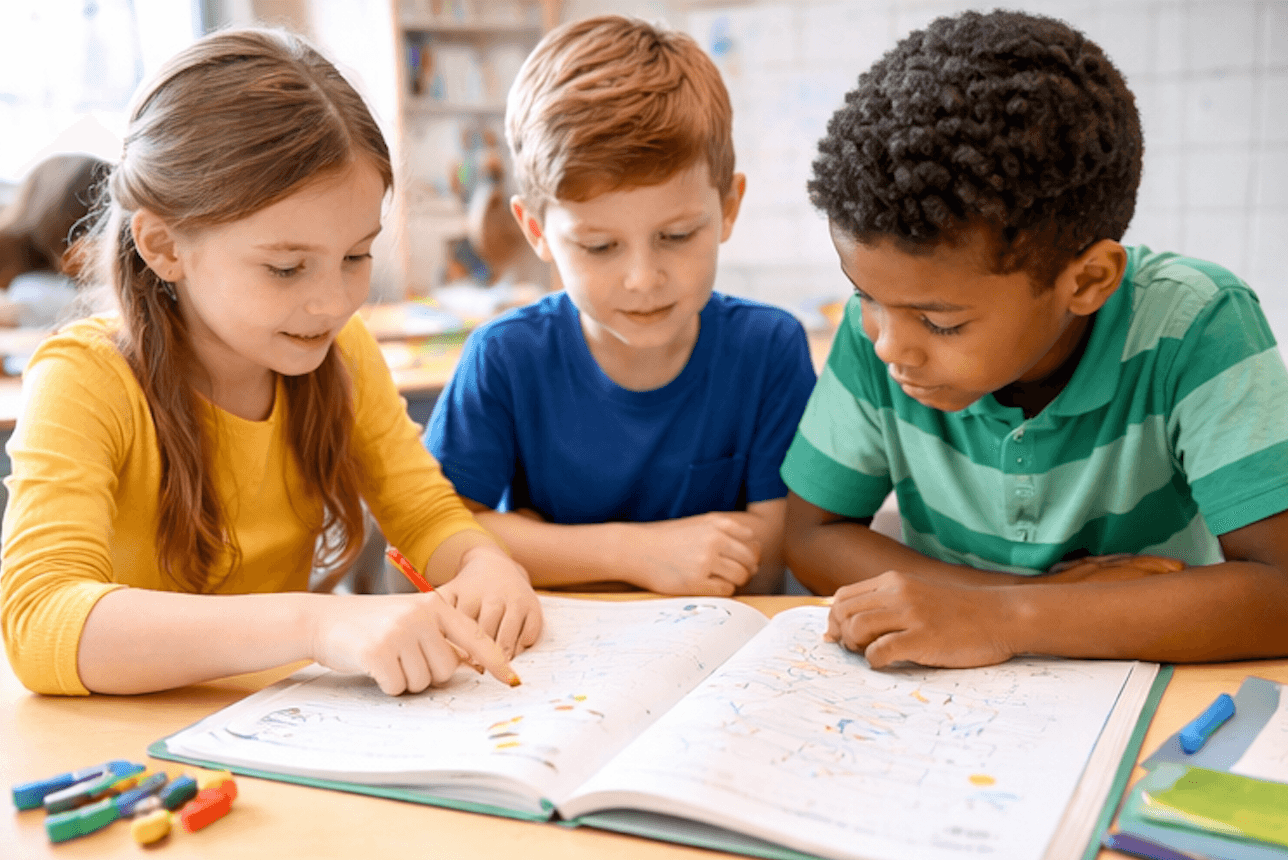
Before worksheets and written sums, use real objects: counters, building blocks, toy cars, grapes. Year 1 children learn maths by handling and manipulating physical things. Abstract symbols on a page make more sense once children have physical experience of what those symbols represent.
2. Keep Sessions Short: 5–10 Minutes
Year 1 children have short attention spans. Five minutes of engaged, focused practice is worth far more than twenty minutes of reluctant work. If your child is losing focus, stop and try again tomorrow.
3. Make Maths Part of Everyday Life
Setting the table (how many plates? knives? forks?), cooking (how many eggs? what does half a cup look like?), and shopping (which costs more? how many coins?) all involve Year 1 maths. Children who encounter maths in real contexts develop stronger number sense.
4. Count, Count, Count
Count everything. Count stairs, count cars, count trees, count in 2s, count backwards from 20. Fluent counting — in both directions — is the foundation of everything.
5. Celebrate Effort and Curiosity
At this age, the most important thing is that your child feels positive about maths. Praise effort and curiosity over correct answers. “I love how hard you tried” matters more than “well done for getting it right.”
Frequently Asked Questions
Are there any tests in Year 1?
The only national assessment in Year 1 is the Phonics Screening Check (for reading, not maths). There are no formal maths tests. Schools track progress through ongoing teacher assessment.
What are the most important Year 1 maths skills?
Number bonds to 10 (and then to 20), counting to 100, and understanding addition and subtraction within 20. If your child masters these three things, they are well prepared for Year 2.
My child can count to 100 but makes mistakes in the 70s/80s/90s. Is that normal?
Completely normal. The “teen” numbers (13–19) and the “ty” numbers (70, 80, 90) are where most Year 1 children trip up. These need more practice — count together regularly, and your child will get there.
Should Year 1 children be doing homework?
DfE guidance suggests about 1 hour per week across all subjects for KS1. For maths at home, 5–10 minutes daily of playful, low-pressure practice is ideal. Reading together is equally (if not more) important at this age.
When do times tables start?
Formal times tables (2, 5, 10) begin in Year 2. But Year 1 lays the groundwork through counting in 2s, 5s, and 10s. If your child can count confidently in these groups, they will find times tables much easier next year.
My child finds maths frustrating. What should I do?
Go back to concrete objects — physical manipulation removes the pressure of getting written sums “right”. Keep sessions very short (5 minutes). Focus on what your child can do, not what they cannot. If frustration persists, talk to their teacher about whether there is a specific gap to address.